
A Practical Guide to Choosing Window Tint, Paint Protection, and Vehicle Care in Abilene, Texas

Key Takeaways
- Window tint can reduce glare, solar heat, and UV exposure, but darker film is not automatically better-performing film.
- Paint protection film, ceramic coatings, and waxes protect vehicles in different ways.
- Abilene drivers should consider sun exposure, dust, road debris, parking conditions, and nighttime visibility.
- Visible light transmission, heat rejection, UV protection, installation quality, and warranty terms all matter.
- Texas tint requirements should be checked before selecting a shade.
Abilene drivers know that a vehicle can face a full day of West Texas sun, airborne dust, highway grit, and intense cabin heat. Choosing the right protection starts with matching products to real driving habits, whether that means better glare control for a daily commute or ceramic coating for cars in Abilene, TX, to make exterior upkeep more manageable.
No single upgrade prevents all types of wear. Window film, paint protection film, ceramic coatings, wash routines, and smart parking habits each address different concerns. The best approach considers how often the vehicle sits outside, travels on rural roads or highways, carries passengers, and gets driven after dark.
Why Abilene’s Sunny Roads Are Hard on Vehicles
Long stretches of bright pavement can create windshield glare and quickly raise interior temperatures, especially for vehicles parked outside during the workday. Dust, insects, loose gravel, and small road debris can also gradually affect paint, headlights, trim, and the leading edge of a hood.
A garage-kept sedan used for short errands has different needs than a pickup that spends most weekdays on the road around Abilene. Drivers searching for automotive ceramic coating near me should first decide which of the following matters, easier washing, paint-chip resistance, improved heat control, or a combination of these matters, matters most.
How Window Tint Works
Automotive window film is applied to the interior side of the glass. Depending on its construction, it can filter visible light, reduce glare, limit solar heat entering the cabin, and help block ultraviolet radiation. Films should be compared by measured performance, not simply by how dark they appear.
Terms Worth Comparing
- Visible light transmission, or VLT: The percentage of visible light that passes through the glass and film together.
- Infrared rejection: A measurement related to the control of heat-producing infrared energy.
- UV rejection: A measure of how much ultraviolet radiation the film filters.
- Glare reduction: Helpful for bright daytime driving, but it should be balanced with nighttime visibility.
- Signal compatibility: Important for drivers who rely on GPS, mobile service, toll tags, or key fobs.
Common Window Film Types
Dyed film is often selected for basic shade and privacy at a lower price point. Metalized film can offer strong glare and heat control, although some versions may interfere with electronics. Carbon film is commonly chosen for its dark appearance and resistance to fading. Ceramic film uses non-metal materials and is often valued for heat control, clarity, and signal compatibility.
Photorealistic image of a clean dark-colored vehicle parked on a West Texas roadside during golden hour, warm sunlight reflecting across the tinted windows and glossy paint, subtle dust in the air, long soft shadows, and an atmospheric view that conveys intense sun, glare control, and everyday vehicle protection.
Names alone do not guarantee performance. Ask to see the film’s stated VLT, UV rejection, infrared figures, warranty coverage, and any guidance about compatibility with vehicle electronics.
How to Choose the Right Tint Shade
The darkest legal-looking option is not necessarily the most practical choice. Very dark glass can improve daytime privacy, yet it may make unlit streets, backing up, and nighttime lane changes more difficult.
- Consider when and where the vehicle is driven after sunset.
- Choose heat rejection and optical clarity based on comfort needs.
- View film samples against the vehicle’s existing glass.
- Confirm the final VLT, rather than relying on the film’s stand-alone rating.
UV Protection and Daily Driving
Sun exposure can add up during commutes, school drop-offs, and road trips. The Skin Cancer Foundation explains that UV window film can help block UVA and UVB light, particularly on side windows and sunroofs, where glass may provide less UVA protection than a laminated windshield.
Film complements, rather than replaces, sun-safe habits. Sunglasses, sunscreen, protective clothing, and parking in shade remain useful. UV protection is also separate from heat rejection, so a film can be strong in one category without delivering the same result in the other.
Paint Protection Film and Ceramic Coatings
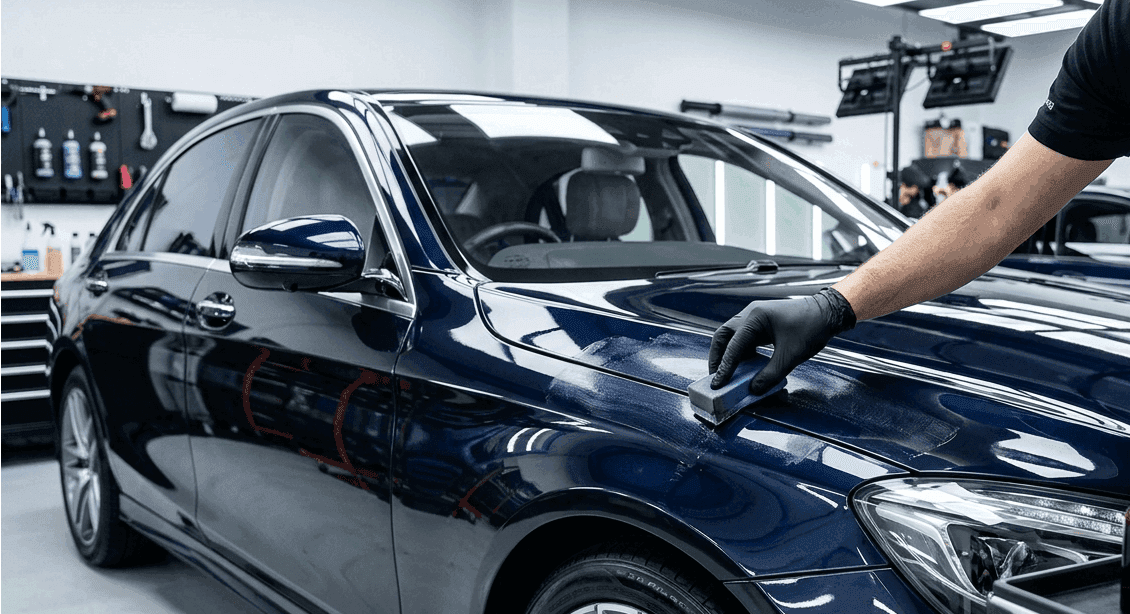
Exterior products serve distinct roles. Paint protection film is a physical barrier commonly used on bumpers, hoods, mirrors, door edges, and rocker panels, where chips and scuffs are more likely to occur. Ceramic coating is a liquid-applied surface treatment that can improve water behavior, make routine cleaning easier, and help reduce the grip of everyday grime. Wax and sealants provide shorter-term shine and protection for owners who prefer regular reapplication.
- Choose paint protection film when stone chips and high-impact areas are the biggest concern.
- Choose ceramic coating when wash convenience, gloss, and surface maintenance are priorities.
- Use wax or sealant for a simple, budget-conscious maintenance routine.
- Combine products carefully when the vehicle needs both impact protection and easier cleaning.
Interior Care for Hot Weather
Window film is only part of protecting an Abilene vehicle’s cabin. Use a windshield sunshade while parked, clean dashboards with products intended for automotive materials, and remove dust before wiping screens or glossy trim. Condition leather according to the vehicle manufacturer’s guidance, and never leave pets, medications, aerosols, or sensitive electronics in a hot vehicle.
Installation Checks and Common Mistakes
Before installation, inspect the glass for chips, scratches, old adhesive, or damaged seals. Ask how the installer controls dust, what the expected curing period is, which cleaners are safe to use afterward, and whether cameras, antennas, sensors, or defroster elements require special consideration. At pickup, inspect film edges, clarity, alignment, and coverage in good lighting.
Common mistakes include choosing film by darkness alone, forgetting the factory glass tint, assuming all ceramic films perform the same, applying exterior protection over poorly prepared paint, and expecting any tint or coating to keep a parked vehicle completely cool.
Common Questions
Does a darker tint always reject more heat?
No. Darkness and heat rejection are different measurements. A lighter, high-quality film may control more heat than a darker entry-level option.
Is paint protection film the same as ceramic coating?
No. Paint protection film is a physical layer designed to help protect against chips and minor impacts. Ceramic coating is a surface treatment designed mainly to improve cleaning and appearance.
How long does window film take to cure?
Curing time depends on film type, weather, humidity, and installation conditions. Follow the installer’s written care instructions, especially before rolling down the windows or cleaning the glass.
Should the windshield be tinted?
Windshield film must preserve clear visibility and comply with applicable Texas requirements. Confirm the legal limits and discuss visibility needs before choosing any windshield treatment.
Final Thoughts
Vehicle protection works best when it reflects how the vehicle is actually used in Abilene. Compare tested film performance, legal limits, installation quality, exterior protection goals, and routine care needs. A thoughtful combination can make daily driving more comfortable while helping preserve the cabin and finish through many bright West Texas miles.


